Tickets still available for next Sunday’s event honoring civil rights icon Rev. James Lawson
Tickets are still available for our event next Sunday, September 23, in Los Angeles, when we will honor the Reverend James Lawson, a civil rights icon
Tickets are still available for our event next Sunday, September 23, in Los Angeles, when we will honor the Reverend James Lawson, a civil rights icon
“The Penalty,” the acclaimed documentary that goes behind the scenes of some of the biggest headlines in the recent history of America’s death penalty, will
The Washington Post this week reported on a study commissioned by the National Registry of Exonerations that found that since 1989, some 2,000 exonerees spent a combined
A doctor who reviewed statements from witnesses to last month’s execution of Billy Ray Irick in Tennessee stated in court filings that their accounts indicate
In New Hampshire, the Senate failed to override Gov. Chris Sununu’s veto of a death penalty repeal bill. The vote was 14-10, just short of the
In its editorial, “Gov. Brown Needs to Speed Up the Review Process for Death Row Inmate Kevin Cooper,” the LA TImes editorial board says that
When Pope Francis declared last week that “the death penalty is inadmissible,” because it is “an attack on the inviolability and dignity of the person,”

Saying there were “fundamental flaws” in his sentencing, Ohio Gov. John Kasich commuted Raymond Tibbetts’ death sentence to life without parole late last month. The

In her Nevada Independent op-ed, “Nevada is preparing to execute a man with significant organic brain damage,” Dr. Natalie Novick Brown, a licensed clinical psychologist who evaluated Nevada death row prisoner Zane Floyd, states that Floyd was born with Fetal Alcohol Spectrum Disorder (FASD). The disorder is “similar in severity to intellectual disability … which has broad implications regarding his behavior, impulse control, and decision-making.” She points out that Floyd is “categorically

In California, the Los Angeles Daily News reports that Stanley Bernard Davis, sentenced to death in 1989 for the murder of Los Angeles college students Michelle Ann Boyd and Brian Harris in 1985, was resentenced last week to life without parole. Los Angeles prosecutors stipulated that Davis’s claim of intellectual disability was legitimate, making him ineligible for the death penalty. Also, in California, the Supreme Court reversed the conviction of death row prisoner Edward Wycoff.
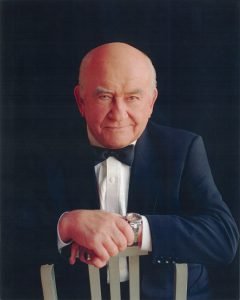
Death Penalty Focus lost a dear friend and one of its most loyal supporters last week. Actor, activist, and all-around good guy, Ed Asner, died late last month at his home in Los Angeles. He was 91.

Oklahoma Attorney General John O’Connor has tentatively scheduled executions for seven men in five months, starting in October and continuing into February. If carried out, they will be the first executions in the state since 2015.

Two bills that would go a long way toward reforming California’s seriously flawed criminal justice systems are on hold until January.
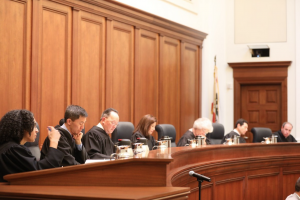
When the California Supreme Court, late last month, upheld a state law that does not require a unanimous jury vote when sentencing a defendant to death, it not only disappointed many criminal justice advocates it surprised them as well.
“We are disappointed the Court didn’t take this step to address one of the many serious flaws in California’s capital punishment system,” Death Penalty Focus Board Chair Sarah Sanger stated. “The Court could have taken a big step toward confronting a deeply biased death penalty system.”
Read DPF’s statement here regarding the disappointing decision announced by the CA Supreme Court today.
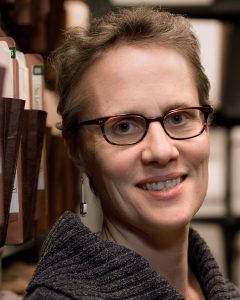
“After the execution of 13 federal prisoners by the Trump administration last year, we knew we had to redouble our efforts to abolish the death penalty on the federal level and urge the President to commute the sentences of the men on death row, while continuing to educate, advocate, and organize for abolition here in California and around the country,” DPF Board Chair Sarah Sanger says. “We believe the best

In “The Trump Executions,” in a University of Texas Law, Public Law Research Paper, Lee Kovarsky analyzes the Trump Administration’s killing spree from July 2020 to January during which 13 federal prisoners were executed by the government. In three parts, Kovarsky puts the executions in historical context, looks at the legal disputes surrounding the government’s actions, and considers the implications of the executions that “smashed into the legal landscape like 13 hurricanes.”