
Florida to begin executions again
After an 18-month hiatus following the U.S. Supreme Court’s Hurst v. Florida decision, Florida is gearing up to begin executions again. Yesterday, the Florida Supreme
After an 18-month hiatus following the U.S. Supreme Court’s Hurst v. Florida decision, Florida is gearing up to begin executions again. Yesterday, the Florida Supreme

Ohio executed its first inmate in three-and-a-half years late last month, using a new three-drug protocol, including midazolam, rocuronium bromide, and potassium chloride. Forty-five-year-old Ronald

“There is no justification for executing the insane, and no reasoned support for it, as only a glance at the brief of amici—filed by able
In Texas, TaiChin Preyor was executed late last month, after his appeal was denied by the U.S. Supreme Court. Preyor, who was convicted of the

“To spend 20 years in prison for a crime he didn’t commit, and emerge with his humanity and dignity intact … to spend 20 years, day in and day out, fighting for his freedom, it was just so extraordinary. It was totally compelling.”
“The execution of a man suffering from severe mental illness is an act of particular barbarism — especially if his condition may have been misdiagnosed
“We will now reverse the district court’s denial of appointed counsel and expert funding . . . vacate its factual findings relating to Panetti’s competency,
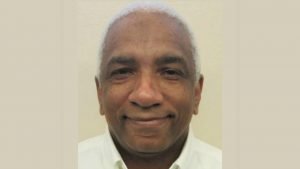
The U.S. Supreme Court sent a condemned Alabama inmate’s case back to a lower court late last month because he did not have access to

After a three-and-a-half-year hiatus, Ohio is again free to tinker with the machinery of death. Ohio has not executed anyone since January 2014, when Dennis

Five years after a statewide task force appointed to study Ohio’s death penalty released a report with 56 recommendations to improve the state’s deeply flawed system, the state may implement one of three recommendations for dealing with mentally ill defendants. Of the three the task force suggested, which included enacting legislation to prohibit capital charges against defendants who suffered from “serious mental illness” at the time of the crime or
In Virginia, the Fourth Circuit Court of Appeals last week upheld a district court ruling that death row prisoners’ long-term detention in solitary confinement creates a “substantial risk” of psychological and emotional harm. The Fourth Circuit also agreed that the state was “deliberately indifferent” to the risk. This decision by the Fourth Circuit means the state cannot reinstitute solitary confinement and other conditions the district court found unconstitutional in 2018. In
In her op-ed, “I will spend my life fighting against the death penalty and I’m proud to have Newsom with me,” in the Orange County Register, DPF Board Member Beth Webb, whose sister was killed and mother wounded in the deadliest mass shooting in Orange County history, writes of how her “life was forever altered that day.” She explains how the anguish of her loss was exacerbated by the district attorney’s
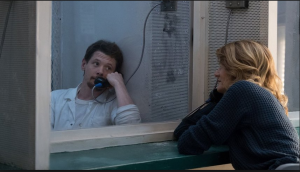
“Inchoate rage” is what compelled writer, director, producer Edward Zwick to co-produce and direct “Trial by Fire,” a feature film about the conviction and execution of Cameron Todd Willingham in Texas in 2004. What sparked his rage was a 16,000-word New Yorker article “Trial by Fire,” in which David Grann painstakingly and movingly recounted Willingham’s case. It started with the fire that consumed Willingham’s ramshackle house within minutes, killing his three

Norman Lear, the legendary writer and producer known for such sitcoms as “All in the Family,” “One Day at a Time,” and “The Jeffersons,” is also a passionate social and criminal justice advocate who founded the People for the American Way. This lifelong commitment to progressive causes is why he will be presented with the 2019 Award for Social Justice in Action by the Leonard I. Beerman Foundation for Peace
In “Why We Can’t Let Rural Prosecutors Fly Under the Radar” in Filter, Rory Fleming uses Monroe County (Rochester, NY) District Attorney Sandra Doorley, who he says “charges more people with felonies than some DAs in counties twice Monroe County’s size,” as an example of a small-county prosecutor who, despite her enthusiasm for harsh sentencing and questionable tactics, wins reelection because reform-minded opponents don’t receive the funding or the support progressive
Global executions fell by almost 31 percent last year, the lowest figure in at least a decade, according to Amnesty International’s annual report, also released this week. The report found that the world’s top five executing countries were China (in the 1000s), Iran (at least 253), Saudi Arabia (149), Viet Nam (at least 85, releasing its total for the first time) and Iraq (at least 52). The U.S. was in
“Gorsuch just handed down the most bloodthirsty and cruel death penalty opinion of the modern era” read the headline in ThinkProgress. “Unusual Cruelty at the Supreme Court,” was the Atlantic‘s headline. And the Baltimore Sun titled its editorial, “On death penalty, Supreme Court veering badly off course.” The opinion eliciting so much shock and outrage was last week’s 5-4 decision in Bucklew v. Precythe. Writing for the majority, Justice Neil

When Gavin Newsom assumed office just four months ago, he promised Californians his administration would “be bold” and would “aim high.” With his decision to impose a moratorium on executions in his state, effective immediately, he kept both promises, and in so doing, cemented his legacy as a leader unafraid of making big decisions that will resonate for years to come. What he did last month took great courage, and the