In brief: July 2017
In Florida, the Palm Beach Post reports that Gov. Rick Scott has scheduled the first execution date for an inmate since the U.S. Supreme Court’s January
In Florida, the Palm Beach Post reports that Gov. Rick Scott has scheduled the first execution date for an inmate since the U.S. Supreme Court’s January
Criminal attorney (and DPF board member) Robert M. Sanger’s article in the current Criminal Law Bulletin, “Duties of Capital Trial Counsel Under the California ‘Death
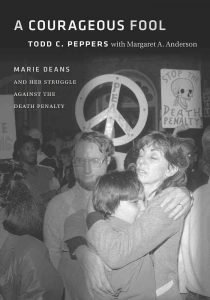
“Marie is one of the unsung heroes from the early years of the fight against the modern death penalty. [Her] work on death row took a
When the lawsuit against Proposition 66 was filed the day after it passed last November, plaintiffs Ron Briggs and the late John Van de Kamp

“If the death penalty is for the worst of the worst, then a person whose actions are driven by an illness over which he has
The death penalty continued to roil political waters in Florida in the last few weeks. Late last month, the U.S. Supreme Court denied an appeal
In Alabama, Robert Melson, who was sentenced to death in 1994 for killing three people, was executed last night, the state’s second execution in two
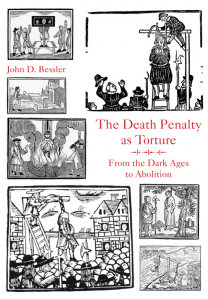
“For justification of any punishment go back to the Enlightenment,” University of Baltimore Law Professor John Bessler says. “Philosophers such as Montesquieu and Cesare Beccaria
There has been a lot of interesting writing about criminal justice published in the last few weeks that we thought you might want to know

On March 13, California Governor Gavin Newsom imposed a moratorium on the death penalty, ensuring there would be no executions while he is in office. He also dismantled the state’s death chamber, and withdrew its lethal injection protocol. Noting the National Academy of Sciences “conservative” estimate that four percent of the people on death rows around the country were wrongfully convicted, Newsom acknowledged that of the 737 condemned men and

“Governor Gavin Newsom’s heroic act of declaring a moratorium on executions in our state has inspired us all,” DPF President Mike Farrell said in his letter http://deathpenalty.org/?p=4073 in this issue. And a poll from the Public Policy Institute of California conducted just two weeks after Newsom’s announcement, bears this out. “A record high 62 percent of adults” in California, 58 percent of whom are likely voters, chose life in prison

Two weeks after Gov. Newsom issued an Executive Order imposing a moratorium, two California Supreme Court justices issued their own critique of the death penalty system, and of Proposition 66, the initiative that promised to speed up executions that was passed by a slim margin in 2016. “California’s death penalty is an expensive and dysfunctional system that does not deliver justice or closure in a timely manner, if at all,” Justice
The U.S. Supreme Court heard oral argument in a jury selection bias case last month in which Mississippi death row prisoner Curtis Flowers, an African-American, was tried six times for murder. Three of his convictions were overturned (because of misconduct on the part of the prosecutor), two ended when jurors were unable to render unanimous verdicts. What’s more, the same prosecutor in all six cases, District Attorney Doug Evans, appears

On Thursday, the Supreme Court considered whether to take the case of a South Dakota death row prisoner who maintains he was sentenced to death because of anti-gay bias on the jury. Charles Rhines, convicted of the 1992 murder of Donnivan Schaeffer during a robbery, was sentenced to death in 1993. While the jurors deliberated whether to sentence him to death or life without parole, they sent the trial judge

Dear Governor Newsom, Do you have ANY IDEA how refreshing it is to the SOUL to have a politician seek public office, who promises to stay true to something, and then actually ENACTS THE TRUTH once s/he gets into office? Who, in short, acts out of moral principle, not, simply, political expediency? You proved to be a man of your word, who, during your campaign professed to morally oppose the
If Alabama were to go ahead with its plan to execute 68-year-old Vernon Madison, he wouldn’t know why. Because of several strokes over the past few years, he has vascular dementia, which has left him with no memory of the crime that sent him to death row 33 years ago. And, because the Eighth Amendment’s ban on cruel and unusual punishment precludes executing a prisoner who doesn’t understand the reasons

The headlines say it all. “The Stench of Prejudice in Keith Tharpe’s Death Sentence,” in the New York Times. “A juror used the N-word. Did that taint a Georgia death sentence?” asked the Los Angeles Times. “A Juror Who Questioned If Black Men Have Souls Sentenced One To Death,” wrote Newsweek. And yet, unbelievable as it may seem, even though one of the jurors who sent Keith Tharpe to Georgia’s

In the space of one week last month, two men walked out of prison, each of whom had spent decades on death row. Freddie Lee Taylor was convicted of the 1985 attempted rape and murder of Carmen Carlos Vasquez in Richmond. After his conviction, he filed numerous appeals on the grounds that he was incompetent to stand trial because of his lifelong history of severe mental illness, and the fact