
Pew Poll shows decline in support for the death penalty
Support for the death penalty declined to 60% from 2020 when 65% were in favor, although a majority of Americans still support capital punishment “despite
Support for the death penalty declined to 60% from 2020 when 65% were in favor, although a majority of Americans still support capital punishment “despite

“Everyone has a breaking point. Anyone can be convinced to confess, to lie. And it’s not only that they can but they do it at

It’s called the Golden Rule argument because it’s used by prosecutors to put jurors in the shoes of the victim. And according to Pepperdine Caruso

“I now believe that the death penalty should absolutely not be a punishment delivered by the state of Florida or for that matter, any place in the
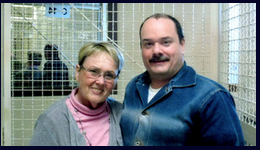
Donna Doolin Larsen is tired. She hasn’t rested since 1995, when she, her mother-in-law, and her then 22-year-old son Keith walked out of her doctor’s

In his new book, A Descending Spiral: Exposing the Death Penalty in 12 Essays, Marc Bookman, the co-founder and executive director of the Atlantic Center for Capital

In Virginia, there is no death row anymore. The Virginia Mercury reports that last weekend, prison officials announced the last two prisoners facing death sentences were

“The first half of 2021 spotlighted two continuing death-penalty trends in the United States. On one hand, the continuing erosion of capital punishment in law
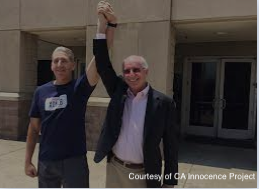
It’s taken 28 years, but William Richards is officially an innocent man. Three weeks ago, a San Bernardino Superior Court judge declared Richards “factually innocent”

In her Nevada Independent op-ed, “Nevada is preparing to execute a man with significant organic brain damage,” Dr. Natalie Novick Brown, a licensed clinical psychologist who evaluated Nevada death row prisoner Zane Floyd, states that Floyd was born with Fetal Alcohol Spectrum Disorder (FASD). The disorder is “similar in severity to intellectual disability … which has broad implications regarding his behavior, impulse control, and decision-making.” She points out that Floyd is “categorically

In California, the Los Angeles Daily News reports that Stanley Bernard Davis, sentenced to death in 1989 for the murder of Los Angeles college students Michelle Ann Boyd and Brian Harris in 1985, was resentenced last week to life without parole. Los Angeles prosecutors stipulated that Davis’s claim of intellectual disability was legitimate, making him ineligible for the death penalty. Also, in California, the Supreme Court reversed the conviction of death row prisoner Edward Wycoff.
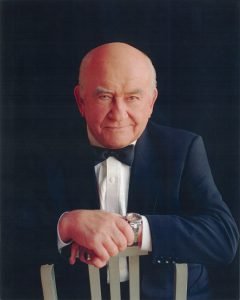
Death Penalty Focus lost a dear friend and one of its most loyal supporters last week. Actor, activist, and all-around good guy, Ed Asner, died late last month at his home in Los Angeles. He was 91.

Oklahoma Attorney General John O’Connor has tentatively scheduled executions for seven men in five months, starting in October and continuing into February. If carried out, they will be the first executions in the state since 2015.

Two bills that would go a long way toward reforming California’s seriously flawed criminal justice systems are on hold until January.
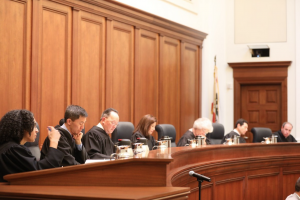
When the California Supreme Court, late last month, upheld a state law that does not require a unanimous jury vote when sentencing a defendant to death, it not only disappointed many criminal justice advocates it surprised them as well.
“We are disappointed the Court didn’t take this step to address one of the many serious flaws in California’s capital punishment system,” Death Penalty Focus Board Chair Sarah Sanger stated. “The Court could have taken a big step toward confronting a deeply biased death penalty system.”
Read DPF’s statement here regarding the disappointing decision announced by the CA Supreme Court today.
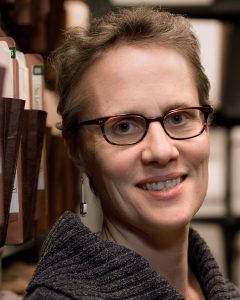
“After the execution of 13 federal prisoners by the Trump administration last year, we knew we had to redouble our efforts to abolish the death penalty on the federal level and urge the President to commute the sentences of the men on death row, while continuing to educate, advocate, and organize for abolition here in California and around the country,” DPF Board Chair Sarah Sanger says. “We believe the best

In “The Trump Executions,” in a University of Texas Law, Public Law Research Paper, Lee Kovarsky analyzes the Trump Administration’s killing spree from July 2020 to January during which 13 federal prisoners were executed by the government. In three parts, Kovarsky puts the executions in historical context, looks at the legal disputes surrounding the government’s actions, and considers the implications of the executions that “smashed into the legal landscape like 13 hurricanes.”