
Two men, in separate murder cases, were exonerated by the Los Angeles County District Attorney last month
Giovanni Hernandez was 14 when he was convicted and sentenced to life in prison for a murder he didn’t commit. Miguel Solorio was 19 when
Giovanni Hernandez was 14 when he was convicted and sentenced to life in prison for a murder he didn’t commit. Miguel Solorio was 19 when
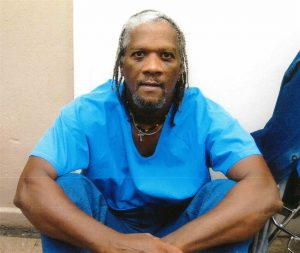
In a phone interview from the 48-square-foot cell on San Quentin’s death row, where he has lived since he was sentenced to death in 1985,
In a letter to California Gov. Gavin Newsom sent last month, American Bar Association President Mary Smith expressed her organization’s “ongoing concerns regarding the case
The American Bar Association (ABA) has sent a compelling letter to Governor Gavin Newsom concerning the case of death-row inmate Kevin Cooper. In this letter,
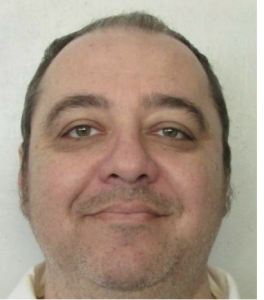
U.S. District Judge R. Austin Huffaker rejected Kenneth Smith’s request for an injunction to stop Alabama from executing him with nitrogen gas late last month,

Florida prosecutor seeks death penalty in sex abuse case in a test of a new state law A Florida prosecutor announced late last month that

“Texas remained an unfortunate outlier as just one of five states to carry out executions in 2023, leading the nation with eight people put to

Our conversation on “Making a Murderer: False Confessions, Wrongful Convictions” was such an enlightening discussion between DPF President Mike Farrell and Dr. Richard Leo, Professor

2023 was the ninth consecutive year that fewer than 30 people were executed in the United States, and fewer than 50 people were sentenced to

Oklahoma’s plan to kill 25 men between next month and December 2024 has been met with outrage and disbelief. Former Oklahoma Gov. Brad Henry and former U.S. Magistrate Judge Andy Lester, co-chairs of the Oklahoma Death Penalty Review Commission, which issued a 300-page report in 2017 detailing the myriad flaws in the state’s capital punishment system, weighed in with an editorial in the Oklahoman this week. They noted that the

In California, three death sentences were overturned by state and federal courts in the past few weeks, the Death Penalty Information Center reports. “Richard Clark, Michael Bramit, and Andrew Lancaster were granted relief on claims related to defense counsel’s inadequate performance or jury-related issues,” according to DPIC. Clark (sentenced in 1987 in Santa Clara) and Bramit (sentenced in 1997 in Riverside) were granted new penalty phase trials, and a Los

In her New York Times piece, “After Parkland, One Question Remains: What Is Justice?”, Audra D. S. Burch writes about Tom and Gena Hoyer, whose son was killed in a mass shooting at Marjory Stoneman Douglas High School in Parkland, Florida in 2018. Fifteen-year-old Luke Hoyer was one of 17 students and teachers killed in the shooting, which also injured 17 others. A penalty trial is now underway for the
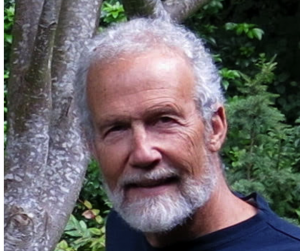
“It was so frustrating to see these horrible, untrue claims go unconfronted. I felt I could go after them and call them out for what they are — absurd.” Dr. Philip Hansten is explaining what inspired him to write his new book, Death Penalty Bullshit: Fifteen Absurd Claims of Death Penalty Supporters, and why he gave it what some might consider a controversial title. “It’s an accurate description. We have

Amnesty International called on President Biden to make good on his 2020 campaign promise and abolish the federal death penalty, and commute the sentences of the 44 men on federal death row. The 114-page report, “The Power of Example: Whither the Biden Death Penalty Promise?”, was released late last month to coincide with the 50th anniversary of Furman v. Georgia, the U.S. Supreme Court decision that struck down the death

The Death Penalty Information Center marked the 50th anniversary of Furman v. Georgia by releasing a census of death sentences handed down from June 29, 1972 — the day the U.S. Supreme Court abolished the death penalty in Furman — through January 1, 2021, and the status of each sentence. “The data provide powerful evidence that the nation’s use of capital punishment continues to be arbitrary, discriminatory, and rife with
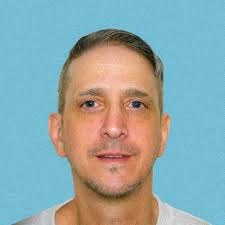
In our June Focus newsletter, we covered how Oklahoma’s attorney general has asked for execution dates for 25 men who have exhausted their appeals, but have valid innocence claims still unresolved. The most well-known among these men is Richard Glossip, who was sentenced to death in 1997, convicted of engineering the murder of Barry Van Treese, the owner of a motel where Glossip worked. The actual killer, Justin Sneed, serving
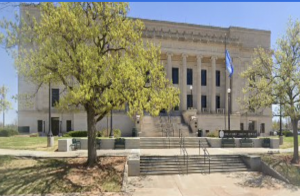
(Updated July 4, 2022) On Friday, the Oklahoma Court of Criminal Appeals scheduled execution dates for 25 men on death row, including individuals with claims of innocence, severe mental illness, and intellectual disability. The CCA set the dates in response to a request by Oklahoma Attorney General John O’Connor, who said he was acting “for the sake of the victims’ families, many of whom have waited for decades.” Despite troubling
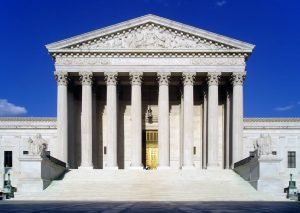
Fifty years ago this week, the United States took a historic step toward a more fair, humane, less racist criminal justice system. On June 29, 1972, the Supreme Court ruled, in Furman v. Georgia, that the death penalty constituted cruel and unusual punishment in violation of the Eighth and Fourteenth Amendments. The decision halted executions nationally, and more than 630 people sentenced to death in the U.S. were resentenced to life in prison.