
Former Warden: “Their Risk of Trauma is Extremely High” in Arkansas Prison
The reaction has ranged from shock and horror to concern for the men and women who will be carrying out this mass execution.

The reaction has ranged from shock and horror to concern for the men and women who will be carrying out this mass execution.
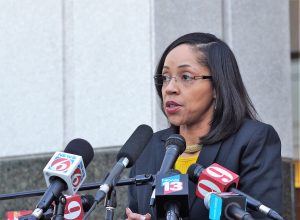
Orlando State Attorney Aramis Ayala is fighting back against Gov. Rick Scott, who took 23 murder cases away from her department because of her stance on the death penalty.
The recent U.S. Supreme Court ruling in Moore v. Texas that found that state’s standards for determining intellectual disability in death penalty cases unconstitutional may mean that a practice by some prosecution experts of adding points to the IQ scores of some minority defendants is also unconstitutional.
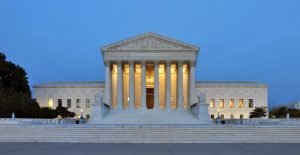
The recent U.S. Supreme Court ruling in Moore v. Texas that found that state’s standards for determining intellectual disability in death penalty cases unconstitutional may mean that a practice by some prosecution experts of adding points to the IQ scores of some minority defendants is also unconstitutional.
We look at some of the more significant developments in death penalty debates around the country last month.
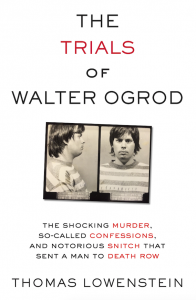
For 16 years, Thomas Lowenstein has been following the case of Walter Ogrod, and has finally written a book about how he ended up on death row in spite of no real evidence of his guilt.

As more nations abandon capital punishment, Amnesty International’s 2016 report sheds light on the world’s remaining executioners and situates the US’s falling use in a global context.

The Guardian is reporting that lawyers for the seven men who are scheduled to be executed over the span of 11 days starting next Monday

Alabama will no longer give judges the final say in whether a defendant is sentenced to death; that responsibility will lie with the jury.

Three events in the last few weeks are indicative of the turmoil still surrounding the death penalty in Florida. When the Florida Supreme Court acquitted Ralph Daniel Wright, Jr. of the murder of his ex-girlfriend and their son last week, he became the 159th person exonerated from death row in the United States since 1973, according to the Death Penalty Information Center. The court’s unanimous decision said the case was

In Alabama on Thursday, the state Senate voted 26-3 to approve a bill already passed by the House that supporters say will trim years off the appeals process in death penalty cases. AL.com reports that the bill, known as the “Fair Justice Act,” “streamlines” the appeals process by requiring death row inmates to exercise their two appeals concurrently instead of consecutively, with appellate teams working simultaneously on behalf of the
In Philadelphia on Tuesday, a civil rights lawyer, who is opposed to the death penalty, has never worked as a prosecutor, and has defended Black Lives matter and Occupy Philadelphia protestors, won the Democratic primary for district attorney. The Associated Press reports that Larry Krasner said his victory was about “a vision of a criminal justice system that works for everyone.” In Georgia on Wednesday, J.W. Ledford, Jr. was executed
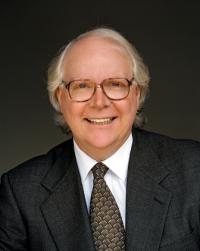
Last year, the editors of the Southwestern Law Review asked Stephen Rohde, a constitutional lawyer and DPF board chair, if he was interested in writing an article for an upcoming issue dedicated entirely to capital punishment. “I told them I’d like to write about my personal journey regarding the death penalty, and they were very open to that,” Rohde says. “It’s rare to have a law review article written in
While the state of Arkansas continues with its plans to execute Kenneth Williams by lethal injection tonight, his lawyers are trying to obtain a stay by arguing that they have “new and compelling evidence” that because of his medical problems, to execute him would cause “unconstitutional pain and suffering.” Williams suffers from organic brain damage, lupus, and has the sickle cell trait. His lawyers say the complaint they filed today

This month marks the 25th anniversary of the Los Angeles riots. It also marks the 25th anniversary of the resumption of executions in California after the U.S. Supreme Court “unabolished” the practice. The proximity of the two events was coincidental, at least at first glance. But 25 years later, the forces that led to the street violence following the Rodney King verdicts and to the upswell of public support for
Guardian reporter Jacob Rosenberg was one of the witnesses to the execution of Marcel Williams, who was the second man put to death by the state of Arkansas last night. His report is chilling. He describes Williams lying on a gurney with his head “locked in place,” lying on his side, facing the witnesses. It isn’t easy to read, and you will feel slightly sick inside knowing that this is
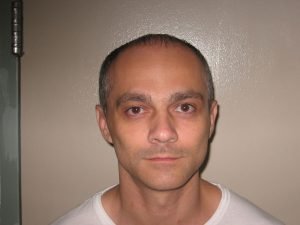
Virginia Governor Terry McAuliffe earlier today commuted the death sentence of Ivan Teleguz, who was scheduled to be executed this Tuesday. There was no physical evidence, and questionable witness testimony, of Teleguz’s guilt in the death of his ex-girlfriend in 2001. McAuliffe commuted the 38-year-old Teleguz’s sentence to life without parole. WHSV reported that McAuliffe said at a news conference,”Because the sentencing phase of Mr. Teleguz’s trial was flawed, I
Two Arkansas death row inmates, Bruce Ward and Don Davis, will not be executed tonight. The Arkansas Supreme Court this afternoon granted stays of executions for the two inmates by a vote of 4-3. The Arkansas Times reports that lawyers for the men asked the high court for the stay while the U.S. Supreme Court takes up a separate case next week concerning access to independent mental health experts by