
Prop 66 could deal a “mortal blow” to California Supreme Court, LA Times reports
The proposition “threatens to deal a mortal blow” to California’s courts, according to several legal organizations.
The proposition “threatens to deal a mortal blow” to California’s courts, according to several legal organizations.
A report published today by Harvard’s Fair Punishment Project says the eight men Arkansas plans to execute, two a day, over a 10-day span next month all either have mental illness, are intellectually disabled, or had inadequate legal representation.

The U.S. Supreme Court has made two significant rulings in death penalty cases in just the past month. One centered on intellectual disability, the other racism. Both cases were out of Texas.
One of Rotary’s stated purposes is “to provide humanitarian services.” So why did Arkansas, which plans to execute eight inmates over ten days next month, ask its local Rotary Club to be citizen witnesses?

A newly-elected State Attorney in Orange-Osceola County announced today that she will not seek the death penalty in any case under her jurisdiction. The Orlando
San Quentin State Prison will no longer place death row inmates in solitary confinement indefinitely, thanks to a lawsuit filed by an Oakland attorney on behalf of six inmates.

A “rush to execute” sends shock waves throughout the United States.
The U.S. Supreme Court ruled in favor of two defendants recently in two very different cases, but with the same issue: racial bias.

Beginning the day after Easter, and continuing over the next 11 days, the state plans to kill seven men, four of whom are black, three white.

The reaction has ranged from shock and horror to concern for the men and women who will be carrying out this mass execution.

Orlando State Attorney Aramis Ayala is fighting back against Gov. Rick Scott, who took 23 murder cases away from her department because of her stance on the death penalty.
The recent U.S. Supreme Court ruling in Moore v. Texas that found that state’s standards for determining intellectual disability in death penalty cases unconstitutional may mean that a practice by some prosecution experts of adding points to the IQ scores of some minority defendants is also unconstitutional.

The recent U.S. Supreme Court ruling in Moore v. Texas that found that state’s standards for determining intellectual disability in death penalty cases unconstitutional may mean that a practice by some prosecution experts of adding points to the IQ scores of some minority defendants is also unconstitutional.
We look at some of the more significant developments in death penalty debates around the country last month.
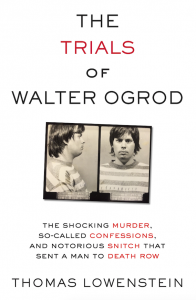
For 16 years, Thomas Lowenstein has been following the case of Walter Ogrod, and has finally written a book about how he ended up on death row in spite of no real evidence of his guilt.

As more nations abandon capital punishment, Amnesty International’s 2016 report sheds light on the world’s remaining executioners and situates the US’s falling use in a global context.

The Guardian is reporting that lawyers for the seven men who are scheduled to be executed over the span of 11 days starting next Monday are in federal court today to argue that what they call “execution by assembly line,” puts their clients “at additional risk of harm because of the difficulty of carrying out eight executions with no room for assessment in between.” The attorneys are also arguing that