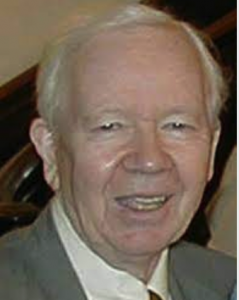
Voices: California People of Faith’s Terry McCaffrey
Terry McCaffrey is on a mission. Chair of the East-West San Francisco Bay Area chapter of the California People of Faith and Amnesty International’s Death

Terry McCaffrey is on a mission. Chair of the East-West San Francisco Bay Area chapter of the California People of Faith and Amnesty International’s Death

A year ago, wrongful convictions and the death penalty were not something that crossed my mind very often. As a Japanese major, I generally stay
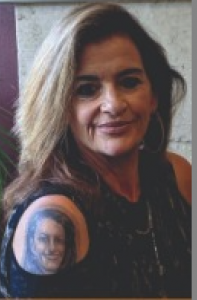
“Ten years seem so long, but when I think about the shooting, about losing Laura, it seems both like it happened yesterday and a million
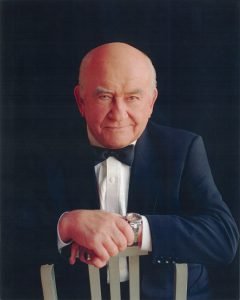
Death Penalty Focus lost a dear friend and one of its most loyal supporters last week. Actor, activist, and all-around good guy, Ed Asner, died late last month at his home in Los Angeles. He was 91.
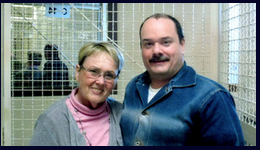
Donna Doolin Larsen is tired. She hasn’t rested since 1995, when she, her mother-in-law, and her then 22-year-old son Keith walked out of her doctor’s
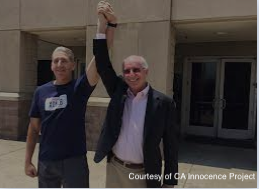
It’s taken 28 years, but William Richards is officially an innocent man. Three weeks ago, a San Bernardino Superior Court judge declared Richards “factually innocent”
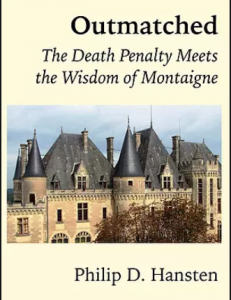
“I am confident there will come a day when we will have abolished the death penalty, and we will wonder how we could possibly have
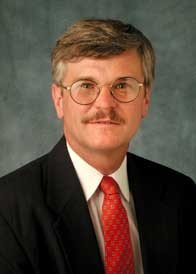
An Interview with Michael Radelet, Ph.D. Michael Radelet is a sociologist at the University of Colorado-Boulder, where he served as chair of the Sociology Department
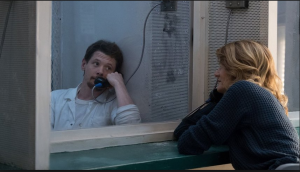
“Inchoate rage” is what compelled writer, director, producer Edward Zwick to co-produce and direct “Trial by Fire,” a feature film about the conviction and execution
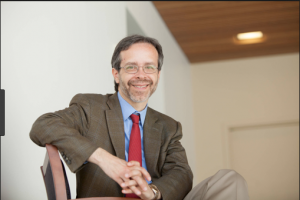
“Everyone has a breaking point. Anyone can be convinced to confess, to lie. And it’s not only that they can but they do it at
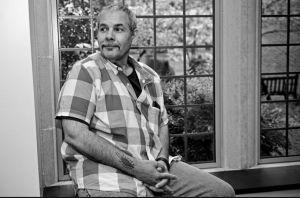
(Editor’s Note: The front page of this newsletter spells Joe Giarattano’s name incorrectly in the headline. We would correct it, but the computer program we use won’t
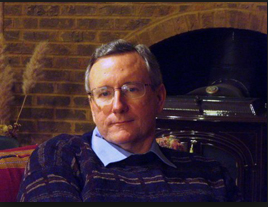
Tennessee’s nine-year break in executions ended in August when the state killed Billy Ray Irick by lethal injection. Last week, Edmund Zagorski was executed by
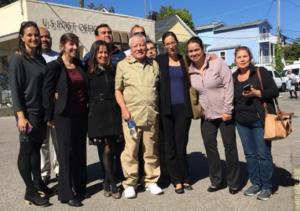
When Vicente Benavides walked out of San Quentin State Prison late last month, the first prisoner in recent memory to walk off California’s death row,
One year ago, we wrote about the case of Walter Ogrod, a man whom many believe was wrongfully convicted of killing four-year-old Barbara Jean Horn
The State of Michigan is the only state to have a death penalty ban in its constitution. That ban was enshrined 116 years after the
Nicola White is a London-based artist whose work is fashioned from the fragments of wood, glass, pottery, and other artifacts she finds on the banks
“I have hope. And because I have hope I have life.” For Kevin Cooper, who has been on San Quentin’s death row since 1985, it
“In the Executioner’s Shadow” is a documentary that examines the death penalty from the per-spective of three very different people, and their very different experiences:

“We have lost one of the best among us, but each day when we do something good for a client, we are renewing our connection

When Orange County Superior Court Judge Thomas Goethals sentenced the man who killed her sister, wounded her mother, and killed seven others in the worst
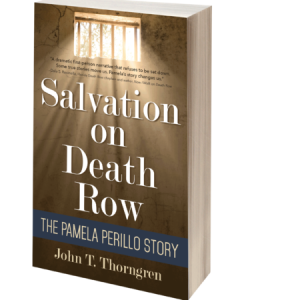
John T. Thorngren is 76 years old, and has had three heart attacks and two open heart surgeries. But he had one last item on
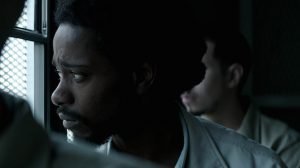
“To spend 20 years in prison for a crime he didn’t commit, and emerge with his humanity and dignity intact … to spend 20 years, day in and day out, fighting for his freedom, it was just so extraordinary. It was totally compelling.”
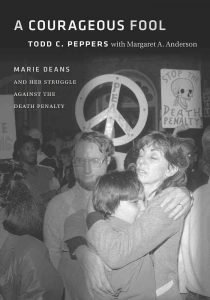
“Marie is one of the unsung heroes from the early years of the fight against the modern death penalty. [Her] work on death row took a
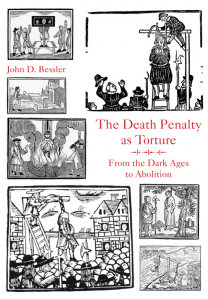
“For justification of any punishment go back to the Enlightenment,” University of Baltimore Law Professor John Bessler says. “Philosophers such as Montesquieu and Cesare Beccaria
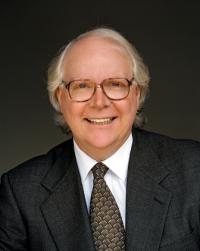
Last year, the editors of the Southwestern Law Review asked Stephen Rohde, a constitutional lawyer and DPF board chair, if he was interested in writing
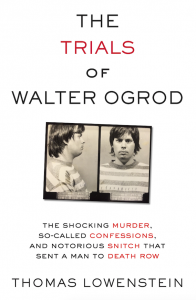
For 16 years, Thomas Lowenstein has been following the case of Walter Ogrod, and has finally written a book about how he ended up on death row in spite of no real evidence of his guilt.
Four Spanish journalists were so affected by the experiences of death row exonerees they spent six years and much of their own money to make a documentary about a group of four men who call themselves the “Resurrection Club.”

“I’m no bleeding heart. I worked in Dade County Homicide for 16 of my 30 years on the job, and saw it all….”

For the past year-and-a-half, abolitionists, religious and political leaders, victims’ family members, and exonerees have shared their thoughts on the death penalty and why they work so hard to abolish it. Here are some of the highlights of those profiles.
He has devoted his life to ending the death penalty. After heading the campaign for Proposition 62, Mike Farrell returned this month to Death Penalty Focus, where he has served as president for almost 30 years. He talks about the campaign, its defeat, and where he thinks we should go from here.
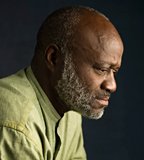
“You know it’s hard every day sitting in a courtroom knowing you’re totally innocent,” Graham says. “I was framed because of my beliefs and because I was outspoken about prison conditions.”
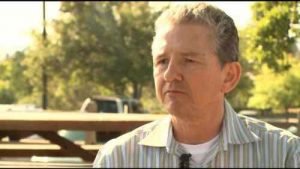
“We actually thought at the time, naively, that a broader death penalty would deter criminals,” Briggs says. “We truly believed the bill would reduce crime in California.”
“I described to the jury how I had to tell my six-year old daughter that she would never see her daddy again. I told them about her putting a flower on the coffin, hugging his coffin. I pulled no punches, let me tell you. I made that jury understand how much pain I was in, how much pain my family was in. I was very persuasive.”
“If putting him to death would bring my mama back, I’d want him dead. But that won’t happen, so what’s the point of killing him? I’m just trying to do the best I can and honor the memory of my mama. I believe in my heart she wouldn’t want this boy put to death.”
“I have represented several death row inmates who were able to avoid execution, and I lost one, Tom Thompson. He was very likely innocent of capital murder, and his case has been chronicled by Judge Reinhardt as a miscarriage of justice.”
“I’m doing the best I can through letters,” Nancy remembers. “I just kept thinking that they’re going to figure out they’ve got the wrong guy. And Mom wrote that everything was going to be fine.”
“When I got called into the office and was told I was going to try this case I was fired up. I was excited to be recognized . . . It was a promotion,”
“In Florida, there is no witness room for the family and friends of the condemned. They have to leave after they say goodbye in the morning, and never see that person again. As the spiritual advisor, I remain in the death house until it’s time to prepare [the inmate] for the gurney. I’m present in the witness room, and I sit in the front row, where he can see me. He knows he can look at me when the time comes.”
“We chose Bill’s story because we wanted to crack open the failures of the criminal justice system, systemically. The racism, the lack of care for veterans and the mentally ill . . . . The only time the government takes control is in punishment.”
“We know from the grand jury report that my sister pleaded for her life, saying ‘Please don’t shoot me, you don’t have to do this.
“No one can speak personally about conducting and being personally responsible for killing people in the name of society better than I can.”
“You’re talking about a person who was basically saved by half of one cell. A cell the size of a mustard seed saved my life. I always think of the Bible and how Jesus said, ‘If you have faith as small as a mustard seed, nothing will be impossible for you.’ I knew I was an innocent man, and that trumped everything for me.”
“I will advocate for the death penalty to be abolished before the Lord calls me home. We can do better. We’re evolving on the issue of crime and punishment and we need a more restorative justice system. It behooves me, as a pro-life Bible conservative, to advance a whole life ethos.”
“The Golden Rule … reminds us of our responsibility to protect and defend human life at every stage of its development. This conviction has led me, from the beginning of my ministry, to advocate at different levels for the global abolition of the death penalty.”
“It is clear that there are overwhelming ethical, financial, and religious reasons to abolish the death penalty,” former president Jimmy Carter wrote in a 2012 op-ed titled “Show Death Penalty the Door”
“I have an obligation. I have a charge to keep. I don’t get tired. I won’t sell out. I won’t be bought out.”

Our conversation on “Making a Murderer: False Confessions, Wrongful Convictions” was such an enlightening discussion between DPF President Mike Farrell and Dr. Richard Leo, Professor of Law and Social Psychology at the University of San Francisco School of Law. https://www.youtube.com/watch?v=eQhfA9_yW54&t=42s Quick Facts Since 1989 there have been at least 3,431 exonerations. Fully 13% of these – 434 cases – contained false confessions or admissions. That percentage soars to 23% in

2023 was the ninth consecutive year that fewer than 30 people were executed in the United States, and fewer than 50 people were sentenced to death, the Death Penalty Information Center states in its 2023 annual report. Twenty-nine states — the majority — have either “abolished the death penalty or paused them by executive action,” according to DPIC. And only five states, Alabama, Florida, Missouri, Oklahoma, and Texas, conducted executions,
Earlier this week, the Alabama Department of Corrections released additional details about its plan to become the first state to use nitrogen hypoxia in state killings. The Alabama Supreme Court ruled in October that the state attorney general could proceed with his plan to execute Kenneth Eugene Smith with nitrogen gas in a 6-2 decision by the all-Republican court. In their post in Substack, Lauren Gill and Dan Moritz-Rabson report
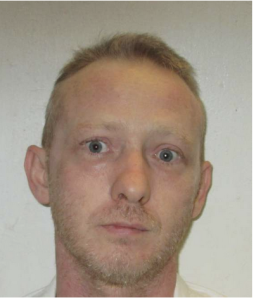
Alabama executed Casey McWhorter earlier this month. He was convicted and sentenced to die in 1994 for the robbery and murder of Edward Lee Williams in 1993. McWhorter was one of three teenagers, one of whom was Williams’ son, charged with the murder. But he was the only one sentenced to death because he was the only defendant who was 18 at the time of the crime. The other two,

“Whether you support capital punishment or oppose it, one thing is clear. Oklahoma’s system is so fundamentally flawed that we cannot know that someone who has been condemned to death actually deserves the ultimate penalty,” writes former U.S. Judge Andy Lester in a letter to the editor in nondoc.com. Lester was one of three co-chairs of the Oklahoma Death Penalty Review Commission that, in 2017, called for a moratorium on

In South Carolina, executions are on hold until at least February, when the supreme court will hold a hearing over a lawsuit filed by four people on death row who argue that electrocution and firing squad are unconstitutional methods of execution, WIS10 reports. The state’s default method of execution is the electric chair but offers the option of a firing squad or lethal injection if the drugs are available, according
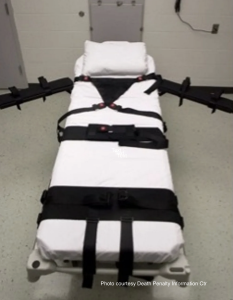
Late last month, Pennsylvania House Bill 999 to repeal the death penalty passed out of the Judiciary Committee on a vote of 15-10. It was supported by all the Democrats and one of the Republicans on the committee. Democratic state Rep. Chris Rabb sponsored the bill, arguing that the repeal is imperative for many reasons, including its astronomical cost and the high risk of executing an innocent person. City &

Texas killed 53-year-old Brent Ray Brewer by lethal injection at the state penitentiary in Huntsville on November 9. And one week later, on November 16, the state executed David Renteria. The state killed a total of eight men this year. It has executed 579 individuals since the U.S. Supreme Court reinstated capital punishment in 1976, according to the Death Penalty Information Center. Brewer was executed for the April 1990 death
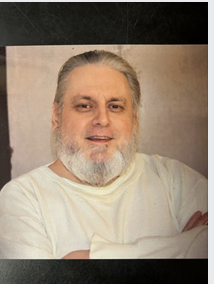
Texas killed 53-year-old Brent Ray Brewer by lethal injection at the state penitentiary in Huntsville last week. Brewer was executed for the April 1990 death of 66-year-old Robert Laminack during a robbery. He was 19 at the time. In 2007, the U.S. Supreme Court overturned Brewer’s 1991 death sentence, finding that finding that the court failed to give his jurors the instructions that they could consider mitigating factors in his