Support for the death penalty is the lowest since the early 70s: Gallup
Support for the death penalty in the U.S. is at its lowest level — 53% — since the early 1970s, Gallup reported this week. The

Support for the death penalty in the U.S. is at its lowest level — 53% — since the early 1970s, Gallup reported this week. The

In his paper, “No Need to Wait: Congress has the Power Under Section Five of the Fourteenth Amendment to Abolish the Death Penalty in the

In Florida, a jury recommended a life without parole sentence for Corey Binderim for the murder of 65-year-old Susan Mauldin in a 7-5 vote, one

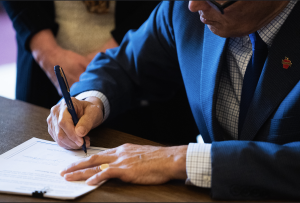
When Gov. John Carney signed Delaware House Bill 70 late last month, he officially repealed Delaware’s death penalty, the final act in a process that

Eight states have killed 20 people so far this year, according to the Death Penalty Information Center https://deathpenaltyinfo.org/stories/outcomes-of-death-warrants-in-2024 .* Seven more people are scheduled to

Robert Roberson was sentenced to death in 2003, convicted by a jury that believed his daughter, Nikki, had died from shaken baby syndrome. That diagnosis

Joseph Giarratano, who spent 38 years in a Virginia prison, 13 of them on death row, for a crime he didn’t commit, died on October

California Gov. Gavin Newsom “has demonstrated a callous disregard for the dark history” of the use of solitary confinement in the state’s prisons and jails,

In their essay “Sacred Victims: Fifty Years of Data on Victim Race and Sex as Predictors of Execution,” in the Journal of Criminal Law and

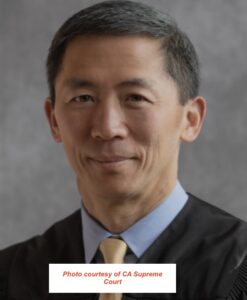
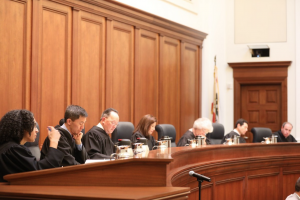
There are no death penalty cases on the California Supreme Court’s late-May calendar, the Horvitz & Levy blog At the Lectern notes, and points out that the last time the Court heard an automatic capital appeal was in February. The blog finds it interesting because after the Court upheld Proposition 66 in 2017, it stated that the initiative’s deadlines for court action on capital cases “must be deemed directive rather

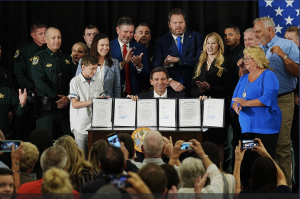
Early this month, Florida Gov. Ron DeSantis signed a bill that would allow a person convicted of the rape of a minor to be sentenced to death. The bill establishes a minimum sentence of life without parole. The new law defies the U.S. Supreme Court’s decision in Kennedy v. Louisiana (2008), which found that “the Eighth Amendment categorically rules out the death penalty in even the most extreme cases of

Last Friday, the U.S. Supreme Court granted Richard Glossip a stay of execution to give the Court time to review two pending petitions. Glossip was scheduled to be executed by Oklahoma on May 18. The stay doesn’t eliminate the possibility that the state will abandon its attempt to kill Glossip, who was sentenced to death in 1997, convicted of engineering the murder of Barry Van Treese, the owner of an

In Texas, a district court judge withdrew the April 26 execution date for Ivan Cantu. CBS Texas reports that the postponement was granted to give more time to review Cantu’s claims that he was convicted in 2001 based on false testimony and questionable evidence. Cantu was sentenced to death for the 2000 killings of his cousin, 27-year-old James Mosqueda, and his cousin’s girlfriend, 22-year-old Amy Kitchen, during a robbery. In

“It’s official. The death penalty is no longer in state law,” Washington Gov. Jay Inslee tweeted last week after signing SB 5087. In a follow-up tweet, he laid out a timeline of the steps that led to abolition. It began in 2014 when Inslee issued a moratorium. Four years later, the state Supreme Court found state killing unconstitutional in State v. Gregory “because it is imposed in an arbitrary and

The bill Florida Gov. Ron De Santis signed into law last week will allow juries to recommend a death sentence with an 8-4 vote, the lowest threshold in the U.S. The legislation was spurred by the frustration felt by DeSantis and Republican lawmakers over the Parkland shooting verdict last year. In that case, Nikolas Cruz was convicted of killing 17 people at Marjory Stoneman Douglas High School in 2018 and

Not even the unprecedented presence of Oklahoma Attorney General Gentner Drummond, who attended the hearing to advocate for clemency for Richard Glossip, was enough to convince the Oklahoma Pardon & Parole Board to grant Richard Glossip clemency on Wednesday. The vote was 2-2, with one abstention. The vote came after a three-hour long hearing, during which independent investigators, Glossip’s attorneys, and Drummond asked the board to grant clemency to Glossip,

SB 94, which would allow judges to review death penalty and life-without-parole sentences for people who have been imprisoned for at least 20 years, passed the Senate Public Safety Committee earlier this month. It now moves to the Appropriations Committee. The cost savings would be enormous. Sen. Dave Cortese (D-San Jose), the bill’s sponsor, said in a news release that it would save the state “hundreds of millions of dollars

In his guest essay, “San Quentin Could Be the Future of Prisons in America,” in the New York Times, Bill Keller writes that “there are many ways to measure the disaster that is America’s prison system,” but the fact that “haunts” him the most is that of the 600,000 people released from prisons every year, “about three-quarters of those released from state prisons nationwide are arrested again within five years.”