Voices: Justice for Walter Ogrod may be finally at hand
One year ago, we wrote about the case of Walter Ogrod, a man whom many believe was wrongfully convicted of killing four-year-old Barbara Jean Horn

One year ago, we wrote about the case of Walter Ogrod, a man whom many believe was wrongfully convicted of killing four-year-old Barbara Jean Horn

It’s no secret that there are some very talented men and women on death rows around the country. We’ve published some of their works here

This week, Alabama Gov. Kay Ivey signed a bill joining Oklahoma and Mississippi in allowing officials to execute prisoners using nitrogen gas, a new, untested,

A new poll conducted by Quinnipiac University finds that American voters choose life without parole over the death penalty 51-37 percent, the first time a

Anthony Ray Hinton spent 30 years on Alabama’s death row for a crime he didn’t commit. He was exonerated and freed in April 2015. The

Tomorrow, on the three-week anniversary of the botched execution of Doyle Lee Hamm, which left him bruised, bleeding and limping after a two-and-a-half hour attempt
On Thursday, February 22, three executions in three different states were scheduled, with three very different outcomes. Eric Branch was executed in Florida, dying with
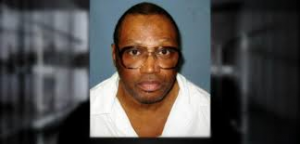
The U.S. Supreme Court late last month stayed the execution of Vernon Madison, less than an hour before it was to take place on January
Kevin Cooper has been on San Quentin’s death row for 33 years for a quadruple murder he didn’t commit. As we reported in the January

The Alaska man accused of killing five people and wounding six in a shooting at Fort Lauderdale-Hollywood International Airport in January 2017 will be sentenced to life in prison without parole in a plea agreement that his lawyers and prosecutors reached yesterday. The agreement is especially surprising because the 28-year-old Esteban Santiago was facing federal charges because the shooting took place at an international airport. But the Miami Herald reports
Kenneth Clair, who spent more than 30 years on California’s death row before having his sentence reduced, is still fighting to prove his innocence. Clair was convicted of the murder of 25-year-old nanny Linda Rodgers in Santa Ana in November 1984, in spite of the fact that two witnesses say the man who killed her was white, and DNA evidence at the crime scene didn’t match his. He was sent

Richard Kamler, who died last year, was an activist and artist who used his skills to protest capital punishment in an unusual and highly effective way. For example, he recorded lions at the San Francisco Zoo, and in April 1992, on the night Robert Alton Harris was executed, Kamler took a boat out on San Francisco Bay near San Quentin Prison. As Sam Whiting in the San Francisco Chronicle reported

Three states, Oklahoma, Mississippi, and Alabama, have recently given the go-ahead to execute prisoners using nitrogen gas, a new, untested, untried method of killing women and men – or, as Oklahoma State Representative Mike Christian refers to them, “these beasts.” Let that sink in for a moment, if you will. . . . Mr. Christian’s new law makes Oklahoma one of three states that may soon execute prisoners by placing
Just how old, how sick, or how mentally ill does a death row prisoner have to be for the government to opt not to execute him and let him die in prison? It’s a question that grows ever more pertinent as the men and women on death rows around the country grow older, suffering from the common physical and mental problems of aging, greatly exacerbated by the additional stressors of
Stating that there’s “a major gap in resources for lawyers who defend capital cases,” the American Bar Association is launching The Capital Clemency Resource Initiative, a project that it says will provide “state-specific information about clemency in death penalty states, plus past petitions, court decisions, academic papers and ABA policy on the subject.” The information lawyers will now have access to includes a manual, Representing Death-Sentenced Prisoners in Clemency: A

A new poll conducted by Quinnipiac University finds that American voters choose life without parole over the death penalty 51-37 percent, the first time a majority chose life over death since the poll first asked the question in 2004. It’s an important development because by including the option of life without parole, the survey shows that the majority opts for the latter. Too often, pollsters question voters about their support
In Georgia, the U.S. Court of Appeals for the Eleventh Circuit declined to hear an appeal by Keith Tharpe that he was sentenced to death because he is African-American, saying he must first present the issue to state courts. In January, the U.S. Supreme Court directed the appeals court to review his sentence after his lawyers presented a post-verdict interview with one of Tharpe’s jurors in which he referred to