
“Why should society answer death with more death?”
Almost six years ago, a man walked into a hair salon and killed his ex-wife and seven other people in Seal Beach, California. One of

Almost six years ago, a man walked into a hair salon and killed his ex-wife and seven other people in Seal Beach, California. One of
William Morva suffers from delusional disorder, a disease that makes him believe things that aren’t true. It’s a serious mental illness, similar to schizophrenia, and

On May 7, 2017, Death Penalty Focus awarded Sen. Bernie Sanders with its top honor, the Abolition Award, for his commitment to ending executions in the United States. He then delivered a thoughtful, moving acceptance speech to those at the event. We now have the video, so you can see it as well.

Former New Mexico Governor Bill Richardson abolished the death penalty in his state in 2009 because, he says, “Empirical evidence and common sense convinced me
When the lawsuit against Proposition 66 was filed the day after it passed last November, plaintiffs Ron Briggs and the late John Van de Kamp

“If the death penalty is for the worst of the worst, then a person whose actions are driven by an illness over which he has
The death penalty continued to roil political waters in Florida in the last few weeks. Late last month, the U.S. Supreme Court denied an appeal
In Alabama, Robert Melson, who was sentenced to death in 1994 for killing three people, was executed last night, the state’s second execution in two
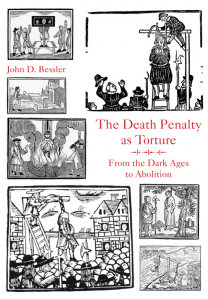
“For justification of any punishment go back to the Enlightenment,” University of Baltimore Law Professor John Bessler says. “Philosophers such as Montesquieu and Cesare Beccaria
“We will now reverse the district court’s denial of appointed counsel and expert funding . . . vacate its factual findings relating to Panetti’s competency, and remand for additional proceedings, another chapter in this judicial plunge into the dark forest of insanity and death directed by the flickering and inevitably elusive guides.” With that dramatic opening statement, the U.S. Court of Appeals for the Fifth Circuit sent the case of
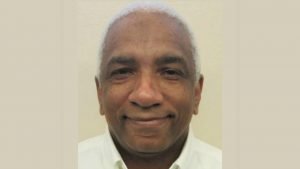
The U.S. Supreme Court sent a condemned Alabama inmate’s case back to a lower court late last month because he did not have access to a mental health expert in preparing a defense based on his mental condition. The Court, in a 5-4 decision, written by Justice Stephen Breyer, said that James McWilliams’ death sentence for raping and killing a store clerk in 1985 should be re-heard, citing Ake v. Oklahoma

After a three-and-a-half-year hiatus, Ohio is again free to tinker with the machinery of death. Ohio has not executed anyone since January 2014, when Dennis McGuire was put to death by lethal injection in a botched execution. But two developments in the last month have cleared the way for the state to resume executions. In June, the 6th U.S. Circuit Court of Appeals, meeting en banc, ruled 8-6 to overturn an
In Florida, the Palm Beach Post reports that Gov. Rick Scott has scheduled the first execution date for an inmate since the U.S. Supreme Court’s January 2016 Hurst v. Florida ruling. That decision found it unconstitutional for states to give judges, not juries, the final decision in death sentencing. It put Florida’s death penalty effectively on hold for 18 months, and will force the state to hold resentencing hearings for hundreds of
Criminal attorney (and DPF board member) Robert M. Sanger’s article in the current Criminal Law Bulletin, “Duties of Capital Trial Counsel Under the California ‘Death Penalty Reform and Savings Act of 2016,” is a guide for trial lawyers in capital cases with pending habeas corpus petitions under Proposition 66. The proposition, which passed in November, is “inoperable” and “unconstitutional” Sanger writes. The California Supreme Court stayed implementation of the proposition

“Marie is one of the unsung heroes from the early years of the fight against the modern death penalty. [Her] work on death row took a terrible physical and mental toll. She died at the relatively young age of 70 – as much a victim of the “machinery of death” as the men she fought to save,” is how Todd Peppers describes Marie Deans, the subject of his biography, A Courageous
William Morva was executed last night, July 6, in the Commonwealth of Virginia, for killing two people, a security guard and a sheriff’s deputy, while he was on a hospital visit from the county jail where he had been incarcerated for a year for a botched burglary. He was sentenced to death in 2008, two years after the murders. Morva suffered from delusional disorder, a disease that made him believe
Rachel Sutphin, the daughter of Eric Sutphin, the sheriff’s deputy who was one of the two people William Morva killed in 2006, is asking Virginia Gov. Terry McAuliffe to commute Morva’s sentence to life without parole. Morva is scheduled to be executed tomorrow, Thursday, at 9 p.m. (EST). The Richmond Times-Dispatch reports that Sutphin emailed media outlets today with a statement that she has been a lifelong opponent of the
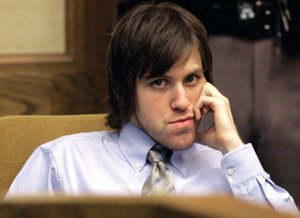
Two human rights experts at the United Nations are adding their voices to the thousands of people who have written, called, and tweeted Virginia Gov. Terry McAuliffe to ask that he commute the sentence of William Morva to life without parole, and call off his execution scheduled for Thursday. In a news release, UN Special Rapporteurs on summary executions, Agnes Callamard, and on right to health, Dainius Pūras, said that “We are