
Alabama legislators vote to “streamline” death penalty appeals
In Alabama on Thursday, the state Senate voted 26-3 to approve a bill already passed by the House that supporters say will trim years off

In Alabama on Thursday, the state Senate voted 26-3 to approve a bill already passed by the House that supporters say will trim years off
In Philadelphia on Tuesday, a civil rights lawyer, who is opposed to the death penalty, has never worked as a prosecutor, and has defended Black
Last year, the editors of the Southwestern Law Review asked Stephen Rohde, a constitutional lawyer and DPF board chair, if he was interested in writing
While the state of Arkansas continues with its plans to execute Kenneth Williams by lethal injection tonight, his lawyers are trying to obtain a stay

This month marks the 25th anniversary of the Los Angeles riots. It also marks the 25th anniversary of the resumption of executions in California after
Guardian reporter Jacob Rosenberg was one of the witnesses to the execution of Marcel Williams, who was the second man put to death by the

Virginia Governor Terry McAuliffe earlier today commuted the death sentence of Ivan Teleguz, who was scheduled to be executed this Tuesday. There was no physical
Two Arkansas death row inmates, Bruce Ward and Don Davis, will not be executed tonight. The Arkansas Supreme Court this afternoon granted stays of executions

Beginning the day after Easter, and continuing over the next 11 days, the state plans to kill seven men, four of whom are black, three white.
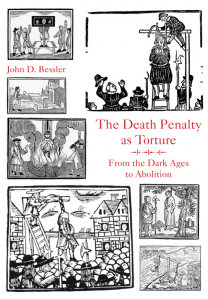
“For justification of any punishment go back to the Enlightenment,” University of Baltimore Law Professor John Bessler says. “Philosophers such as Montesquieu and Cesare Beccaria said you can only justify a punishment if it’s absolutely necessary. There were no penitentiaries back then; today we have prisons. One cannot say it’s absolutely necessary to put someone to death. We need to continue legal challenges to the death penalty, but there are
There has been a lot of interesting writing about criminal justice published in the last few weeks that we thought you might want to know about. Here’s a small sampling. Stephen Cooper, a former federal public defender in Alabama, explains in a column for the LA Post Examiner that his opposition to the death penalty would have included even Hitler if he had been captured alive. A study in the
It passed by the slimmest of margins in November’s election, but Prop 66 has been stayed by the California Supreme Court since a lawsuit challenging its constitutionality was filed in the aftermath of the election. DPF board member and death penalty attorney Aundre Herron brings us up to date on the latest developments in the legal challenges facing this problematic initiative.

William Morva suffers from delusional disorder, a disease that makes him believe things that aren’t true. It’s a serious mental illness, similar to schizophrenia, and it caused him to commit two murders for which the state of Virginia now wants to execute him. He is scheduled to die on July 6. William Morva was a sweet, sensitive, and compassionate boy. He was well-loved by his group of friends, interested in
Sen. Bernie Sanders, Joan Baez, legendary defense attorneys Judy Clarke and Thomas H. Speedy Rice were honored last weekend at the Death Penalty Focus 26th Annual Awards Dinner in Beverly Hills. The sold-out event began with 13 exonerees, all of whom had been sent to prison for murders they did not commit, and who were subsequently exonerated based on evidence of their innocence, stepping on to the stage and announcing

”Many of the findings of the Commission’s year-long investigation were disturbing and led Commission members to question whether the death penalty can be administered in a way that ensures no innocent person is put to death.” That was the conclusion of the Oklahoma Death Penalty Review Commission when it issued the results of its year-long study of the state’s death penalty scheme last month. Their recommendation: ”Due to the volume

“Excessive bail shall not be required, or excessive fines imposed, nor cruel and unusual punishments inflicted,” says the Eighth Amendment of the U.S. Constitution. You will find similar language in the Japanese constitution, included at the order of the United States government after it defeated Japan in World War ll. Japanese Article 36 says “The infliction of torture by any public officer and cruel punishments are absolutely forbidden.” These restrictions
The state’s high court announced Thursday that it will hear oral argument in Briggs v. Brown, the lawsuit challenging the constitutionality of Proposition 66, which passed by the slimmest of margins last November. The hearing will be held at 9:30 a.m (PDT), Tuesday, June 6, in the Supreme Court courtroom in Los Angeles. (The oral argument can be livestreamed.) The lawsuit brought by former California Attorney General John Van de