
Idaho governor denies commutation for Gerald Pizzuto, Jr.
Gerald Pizzuto, Jr. is 65 years old, dependent on a wheelchair, diabetic, and on hospice care because of advanced bladder cancer. He suffers from the

Gerald Pizzuto, Jr. is 65 years old, dependent on a wheelchair, diabetic, and on hospice care because of advanced bladder cancer. He suffers from the

Last month, the U.S. Supreme Court heard oral arguments in the case of Shinn v. Ramirez. It’s a complicated case, involving two respondents, David Ramirez

On Wednesday, December 8, 2021, we will presented “The Death Penalty Brutalizes Us All,” the fourth in our webinar series. Mike Farrell, DPF board president,

In his op-ed, “California halted executions, now it should abolish the death penalty,” in the Los Angeles Times, Scott Martelle says the moratorium on executions

In Mississippi, David Cox died by lethal injection late last month in the state’s first execution since 2012. Cox, who had asked the court to

Doyle Lee Hamm, who survived a horrifically botched execution in Alabama’s Holman Correctional Facility in 2018, died late last month in prison. The cause was

Pervis Payne, who has been on Tennessee’s death row for 34 years, and has always maintained his innocence, will be resentenced to life in prison

Oklahoma executed Bigler Stouffer II on Thursday. He was 79, the second-oldest prisoner to be killed in the U.S. since the death penalty was reinstated
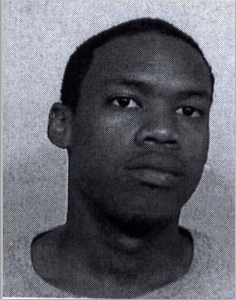
Right up to and including the commutation of his death sentence, the state of Oklahoma acted with deliberate malice and cruelty to Julius Jones. Yes,
“Yay Gavin Newsom. I’m very thankful to him for having the courage, the guts, to stand up and say before California murders anyone on my watch I want to know all the facts.” Kevin Cooper was responding to the news that California Gov. Gavin Newsom late last month ordered additional DNA testing on evidence from the 1983 quadruple murder case that sent him to death row almost 34 years ago. From the time
In New Hampshire on Thursday, by a veto-proof vote of 279-88, the House repealed the state’s death penalty and replaced it with a sentence of life without parole. The Concord Monitor reports that the “bill is identical in wording to the bill that passed last year,” which was vetoed by Gov. Chris Sununu. The paper reports the bill will now go to the Senate, where it is expected to pass
In their paper, ” ‘A World of Steel-Eyed Death’: An Empirical Evaluation of the Failure of the Strickland Standard to Ensure Adequate Counsel to Defendants with Mental Disabilities Facing the Death Penalty,” law professor Michael L. Perlin, criminology professor Talia Roitberg Harmon, and doctoral student Sarah Chatt analyze how inadequacy of counsel claims, established by the U.S. Supreme Court’s decision in Strickland v. Washington (1984), were decided in the Fifth

“Everyone has a breaking point. Anyone can be convinced to confess, to lie. And it’s not only that they can but they do it at great risk to their future. It’s deeply fascinating and deeply troubling. The idea that someone would give a false confession is so counterintuitive, it fascinates me intellectually,” says Richard A. Leo, a Professor of Law and Psychology at University of San Francisco’s law school. Leo
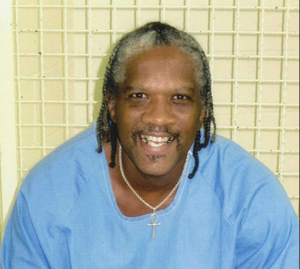
California Gov. Gavin Newsom today ordered additional DNA testing on evidence in the case of Kevin Cooper, who was sent to death row almost 34 years ago for a quadruple murder in Southern California that he has insisted he didn’t commit. “I take no position regarding Mr. Cooper’s guilt or innocence at this time. Especially in cases where the government seeks to impose the ultimate punishment of death, I need to be
The Toledo Blade reports that Ohio Governor Mike DeWine is putting executions on hold because, he said today, “Ohio is not going to execute someone on my watch when a federal judge has found it to be cruel and unusual punishment.” DeWine was referring to a January decision by a federal judge in response to a challenge of the state’s use of midazolam in executions by attorneys for condemned prison
Proposition 66 was passed by popular vote in 2016. Proponents insisted the proposition would speed up the process of capital trials and executions. It was big on promises, and short on details, but a slim majority — 51% — of Californians voted in favor of it. As a result, the California Judicial Council, under the auspices of the Chief Justice of the California Supreme Court, created rules implementing Proposition 66, scheduled
Republican Governor Mike DeWine postponed the execution of Warren Keith Henness late last month and ordered the state Department of Rehabilitation & Correction to “to assess Ohio’s current options for execution drugs and examine possible alternative drugs.” Henness was scheduled to be executed next Wednesday. DeWine ordered the reprieve in response to a decision issued by a federal judge on January 14 stating that, “If Ohio executed Warren Henness under its
“Kevin Cooper Case: Was the Wrong Man Convicted in the 1983 Chino Hills Massacre?” was the title of a two-hour episode on a “48 Hours” program on CBS. An op-ed in the Los Angeles Times asked, “DNA tests could reveal if Kevin Cooper was wrongly convicted of murder. Why didn’t Jerry Brown order them?”. And Kevin Cooper wrote two op-eds, one in the San Francisco Chronicle, “Death row inmate asks Gov. Newsom