Could Hidalgo v. Arizona give SCOTUS the impetus to end the death penalty?
The U.S. Supreme Court will decide soon whether to accept Hidalgo v. Arizona, which not only challenges Arizona’s death penalty statute, but the death penalty

Late last month, federal prisoner Ulysses Jones, Jr. was sentenced to life in prison for the 2006 murder of another inmate at the U.S. Medical
In California, Supreme Court Chief Justice Tani Cantil-Sakauye told a group of reporters that she expects Proposition 66, which passed in November 2016 on the
In “Two Murder Convictions for One Fatal Shot,” in the November 13 issue of the New Yorker, Ken Armstrong examines a disturbingly frequent practice by
“In the Executioner’s Shadow” is a documentary that examines the death penalty from the per-spective of three very different people, and their very different experiences:
Application Deadline: January 22, 2018 Death Penalty Focus (DPF), a national nonprofit organization founded in 1988 to abolish the death penalty, is seeking an Executive
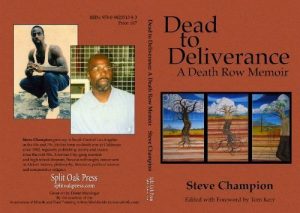
It’s not just amazing art that’s being produced on San Quentin’s death row, there is also some insightful, thought-provoking literature and poetry being written as

It’s not often we can share inspiring or uplifting information these days, but Nicola White, a London-based artist, has been working with prisoners at San

Death Penalty Focus is partnering with CharityBuzz to bring you FOUR new charity auctions–your chance to meet Patty Jenkins, Jeff Goldblum, Ben and Jerry, and
“You’re talking about a person who was basically saved by half of one cell. A cell the size of a mustard seed saved my life. I always think of the Bible and how Jesus said, ‘If you have faith as small as a mustard seed, nothing will be impossible for you.’ I knew I was an innocent man, and that trumped everything for me.”
It’s called ethnic adjustment. “This practice is a symptom of a dysfunctional death penalty system where prosecutors seek to ‘win’ by executing the mentally disabled and people of color at all costs,” says Robert M. Sanger, a senior partner at the Santa Barbara law firm, Sanger Swysen & Dunkle. “Borrowing from Justice Blackmun, this is a part of the machinery of death. It is a disturbing part. And it is
“I will advocate for the death penalty to be abolished before the Lord calls me home. We can do better. We’re evolving on the issue of crime and punishment and we need a more restorative justice system. It behooves me, as a pro-life Bible conservative, to advance a whole life ethos.”
Dear Friends, I want you to know that I have taken a leave of absence as President of DPF in order to investigate the possibility of an initiative campaign to end the use of state killing in California next year. To that end, last month I filed a proposed ballot initiative entitled The Justice That Works Act of 2016. This is a very exciting prospect, but it will take a
The Inter-American Commission on Human Rights has issued a report on the case of Kevin Cooper, a man who has been locked up on San Quentin’s Death Row since 1985. A petition was filed in 2011 by Cooper’s attorneys Norman Hile and Katie DeWitt arguing that Cooper was sentenced to death for a crime he didn’t commit. It outlined the mishandling of the crime scene, the false evidence presented by
“The Golden Rule … reminds us of our responsibility to protect and defend human life at every stage of its development. This conviction has led me, from the beginning of my ministry, to advocate at different levels for the global abolition of the death penalty.”
MONTANA – A judge ruled earlier this month that the lethal injection drug protocol did not comply with state law and ordered an indefinite halt to all executions. District Judge Jeffrey Sherlock of Helena said the state’s current method is not an “ultra-fast-acting barbiturate,” as required and the statute must be modified. The lawsuit was brought by Montana’s two death-row inmates, Ronald Smith and William Gollehon. OKLAHOMA – An autopsy
It’s a busy term for the death penalty at the United States Supreme Court. A total of six cases will be considered by the justices over the next two months. They primarily involve procedural questions and none appear to have the ability to abolish capital punishment entirely, a subject the justices were divided on last term. Two cases out of Kansas were heard October 7. One dealt with sentencing requirements
“It is clear that there are overwhelming ethical, financial, and religious reasons to abolish the death penalty,” former president Jimmy Carter wrote in a 2012 op-ed titled “Show Death Penalty the Door”