
“An act deserving of a bolt of lightning from a vengeful God”
I am furious! I am disgusted. I am an American and this perfidy is being carried out in my name. That the would-be ruler of

I am furious! I am disgusted. I am an American and this perfidy is being carried out in my name. That the would-be ruler of

The State of Texas plans to execute 34-year-old Christopher Young next month. He was sentenced to death in 2006 for the murder of 55-year-old convenience
In a unanimous vote, the San Francisco Labor Council, which is affiliated with 150 unions, and represents more than 100 thousand union members and their
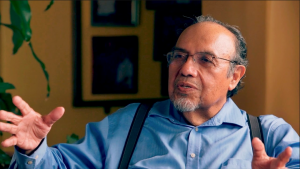
The DPF Board of Directors announced this week that longtime social and criminal justice advocate Magdaleno Rose-Avila has been appointed to the position of Executive
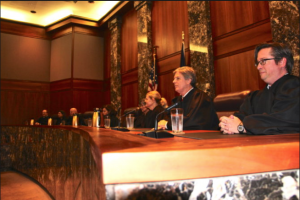
Bobby James Moore will not be leaving Texas’ death row any time soon. On Wednesday, the Texas Court of Criminal Appeals ruled that Moore is
When the California Supreme Court unanimously ruled to overturn the death sentence of Robert Lewis Jr. late last month finding “substantial evidence” that he is

“In 34 years at the New York Times, I’ve never come across a case in America as outrageous as Kevin Cooper’s,” Nicholas Kristof wrote in
The ACLU of Northern California won a round in court late last month when a Marin County Superior Court judge ruled that its challenge to
In Texas, a 5th Circuit Court of Appeals panel said yesterday it will consider parts of an appeal that lawyers for death row prisoner Andre
In Alabama, Robert Melson, who was sentenced to death in 1994 for killing three people, was executed last night, the state’s second execution in two weeks. Melson had been granted a temporary stay last week, but an order signed by U.S. Supreme Court Justice Clarence Thomas lifted the stay on Tuesday. Melson’s challenge argued that the state’s three-drug lethal injection cocktail “has failed to work properly.” Four other death row inmates
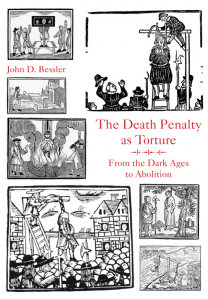
“For justification of any punishment go back to the Enlightenment,” University of Baltimore Law Professor John Bessler says. “Philosophers such as Montesquieu and Cesare Beccaria said you can only justify a punishment if it’s absolutely necessary. There were no penitentiaries back then; today we have prisons. One cannot say it’s absolutely necessary to put someone to death. We need to continue legal challenges to the death penalty, but there are

There has been a lot of interesting writing about criminal justice published in the last few weeks that we thought you might want to know about. Here’s a small sampling. Stephen Cooper, a former federal public defender in Alabama, explains in a column for the LA Post Examiner that his opposition to the death penalty would have included even Hitler if he had been captured alive. A study in the
It passed by the slimmest of margins in November’s election, but Prop 66 has been stayed by the California Supreme Court since a lawsuit challenging its constitutionality was filed in the aftermath of the election. DPF board member and death penalty attorney Aundre Herron brings us up to date on the latest developments in the legal challenges facing this problematic initiative.

William Morva suffers from delusional disorder, a disease that makes him believe things that aren’t true. It’s a serious mental illness, similar to schizophrenia, and it caused him to commit two murders for which the state of Virginia now wants to execute him. He is scheduled to die on July 6. William Morva was a sweet, sensitive, and compassionate boy. He was well-loved by his group of friends, interested in
Sen. Bernie Sanders, Joan Baez, legendary defense attorneys Judy Clarke and Thomas H. Speedy Rice were honored last weekend at the Death Penalty Focus 26th Annual Awards Dinner in Beverly Hills. The sold-out event began with 13 exonerees, all of whom had been sent to prison for murders they did not commit, and who were subsequently exonerated based on evidence of their innocence, stepping on to the stage and announcing


”Many of the findings of the Commission’s year-long investigation were disturbing and led Commission members to question whether the death penalty can be administered in a way that ensures no innocent person is put to death.” That was the conclusion of the Oklahoma Death Penalty Review Commission when it issued the results of its year-long study of the state’s death penalty scheme last month. Their recommendation: ”Due to the volume

“Excessive bail shall not be required, or excessive fines imposed, nor cruel and unusual punishments inflicted,” says the Eighth Amendment of the U.S. Constitution. You will find similar language in the Japanese constitution, included at the order of the United States government after it defeated Japan in World War ll. Japanese Article 36 says “The infliction of torture by any public officer and cruel punishments are absolutely forbidden.” These restrictions